

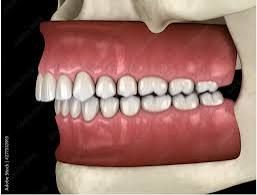
There are a lot of methods to correct malocclusions and part of which are the following therapeutic methods and clinical procedures;
Orthodontic Treatment:
1- Braces:
Traditional braces, consisting of brackets, bands and wires, are generally adopted to correct and rectify dental malocclusions. They work by gradually pushing the teeth into their appropriate position in order to produce the required occlusal contact.
In mild to moderate Class patients of maloclussion, braces and bands can be brought into the fore to rectify the position of the teeth into the appropriate place and improve the bite contact.
2- Clear Aligners:
Clear aligners including Invisalign device, offer a more aesthetic alternative to braces. These portable, removable, transparent trays intermittently and gradually shift the teeth little by little into their desired positions. However, clear aligners require strict and enthusiastic patient compliance in order to get desired results for mild to moderate cases of maloclusions.

3- Functional Appliances:
Functional appliances including twin blocks or Herbst appliances, are required for jaw growth modification in growing children. These appliances using enforce and apply forward traction to the mandible, thereby supporting its growth and improving the jaw relationship in order to arrive at a desired result.
Orthopedic Treatment:
Headgear:
Headgear is an orthopedic device that enforces or impacts backward traction to the upper jaw, thereby acting in opposite direction to the growth of the jaw. This will counters the jaw's protruding growth direction and give room for the lower jaw to meet up with the rapid growth rate of the upper jaw. This treatment is typically and generally adopted for growing children and adolescents or even younger adults.
Rapid Maxillary Expansion (RME):
RME is a procedure adopted to widen the upper jaw in growing children or younger adults.
A special device known as palatal expander is placed or fixed on the palatal area between upper teeth and gradually widened over time by increasing the screw movement from the patient.
This procedure is very fruitful in correcting crossbites and improving the overall occlusion and alignment of the jaws and teeth.
Surgical Treatment or Approach:
Orthognathic Surgery:
"In severe cases of Class II malocclusion, where there is a significant skeletal discrepancy, orthognathic surgery may be necessary. This surgical procedure involves repositioning the jaws to achieve proper alignment. It is often combined with orthodontic treatment to ensure optimal results."Source

Genioplasty:
Genioplasty is a surgical approach that includes modification or repositioning of the chin in order to improve facial balance and aesthetics appearance. It can be done together with orthognathic surgery or as a standalone clinical work.
Combination Treatment:
Orthodontics and Surgery:
In a severe Class II case, a conjunction of both orthodontic treatment and orthognathic surgery is generally adopted to be the most effective therapeutic approach. Orthodontic appliances are used to correlate the teeth before surgical intervention and post-surgical orthodontic treatment are employed as a finishing job to fine-tunes the occlusion.
Growth Modification:
Timing of Treatment:
Early intervention during the growth phase of life can be very helpful for children with Class II malocclusion. Growth modification approaches, including the adoption of functional appliances and orthopedic devices, can provide the jaw with a blueprint to follow growth and improve the jaw relationship on occlusion and outside occlusal contact.

That's all as regards this post, more would be greatly reviewed in the subsequent posts and happy reading.
Happy Blogging and Reading 💥💥💥🦷🌴
cross posted from my Blurt Account

 1646.297 SRY