


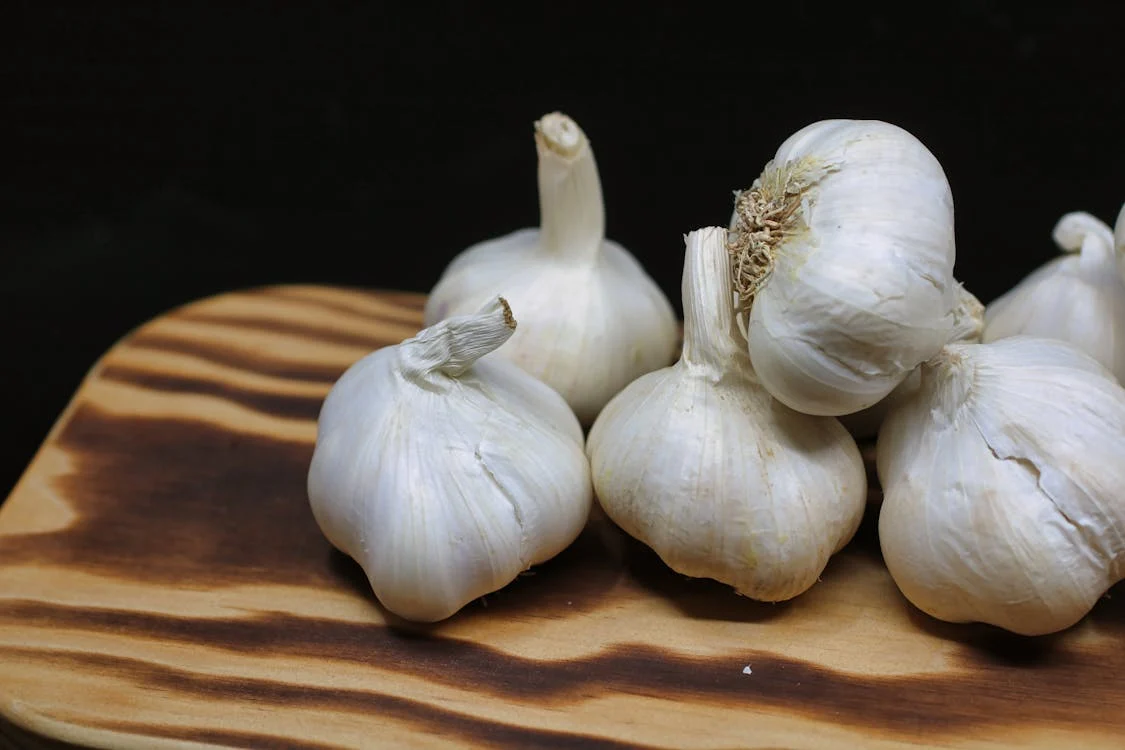
Garlic, also known as Allium sativum, is a delicious spice that is used extensively in cooking. It is also famous for its medicinal properties.
Benefits of Garlic:
• Boosts immunity: Garlic contains antioxidant and antibacterial properties that help boost immunity.
• Reduces the risk of heart disease: Garlic helps lower blood pressure, improve blood circulation and lower bad cholesterol levels, which can reduce the risk of heart disease.
• Helps prevent cancer: Garlic contains certain ingredients that can help prevent the growth of cancer cells.
• Keeping blood pressure under control: Garlic helps lower blood pressure, which can be beneficial for patients with high blood pressure.
• Improving brain health: Garlic can help improve blood circulation to the brain and improve memory and focus.
However, consuming too much garlic can cause some side effects:
• Gastrointestinal problems: Garlic can cause stomach discomfort, indigestion, diarrhea and nausea.
• Increased risk of bleeding: Garlic can thin the blood, which can increase the risk of bleeding, especially in people taking blood-thinning medications.
• Bad breath: Garlic can cause bad breath.
• Allergic reactions: Some people may have allergic reactions to garlic, which may include rash, itching and difficulty breathing.
How much garlic is safe to eat?
For most people, consuming 2-4 cloves of garlic per day is considered safe. However, if you experience any of the side effects mentioned above, you should reduce or avoid garlic.
Pregnant or lactating women, children and people with any medical conditions should consult their doctor before consuming garlic.
In conclusion, garlic is a healthy food that offers various health benefits. However, excessive consumption should be avoided as it may cause some side effects. How much juice for you

 782.594 SRY